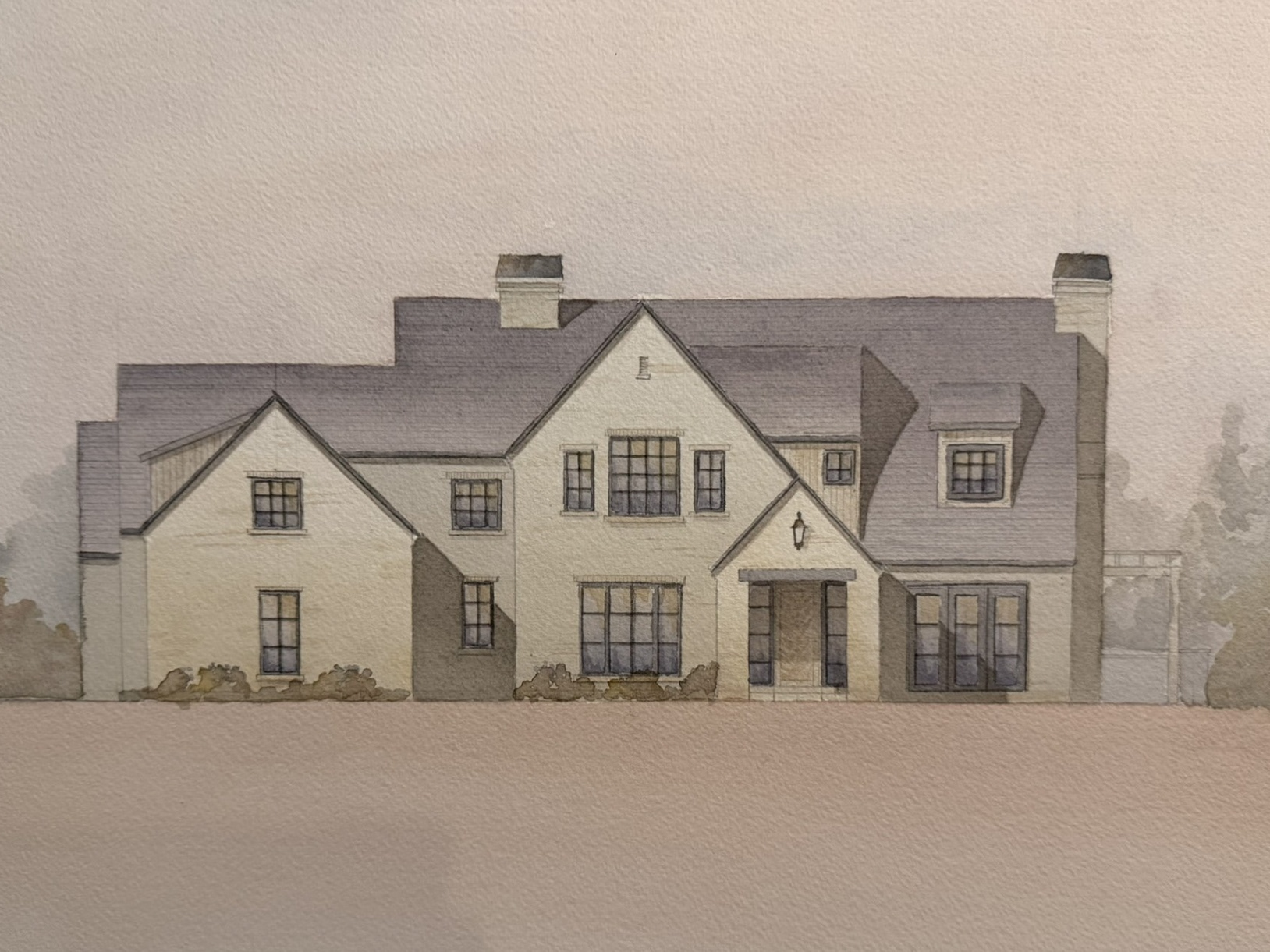
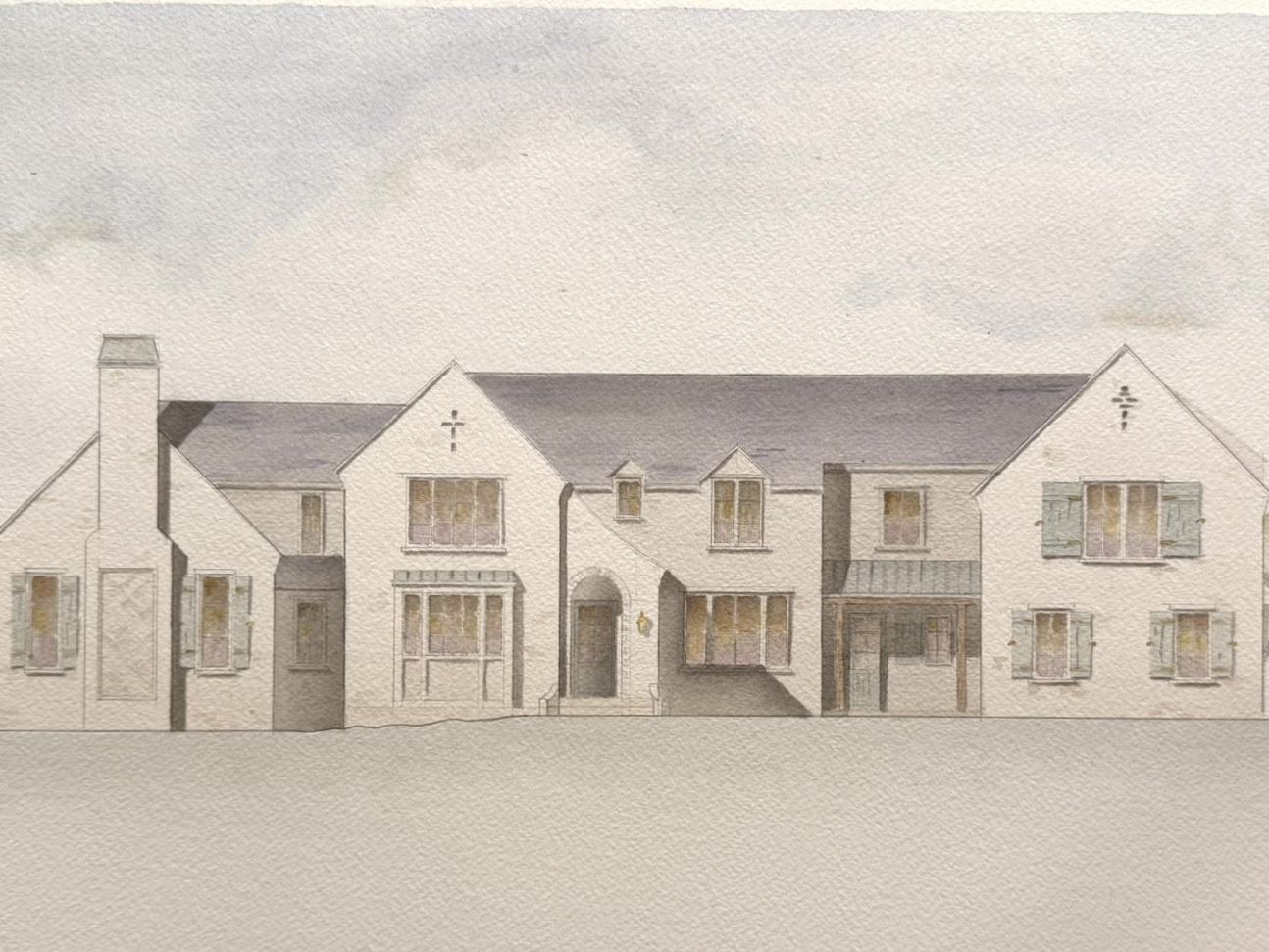
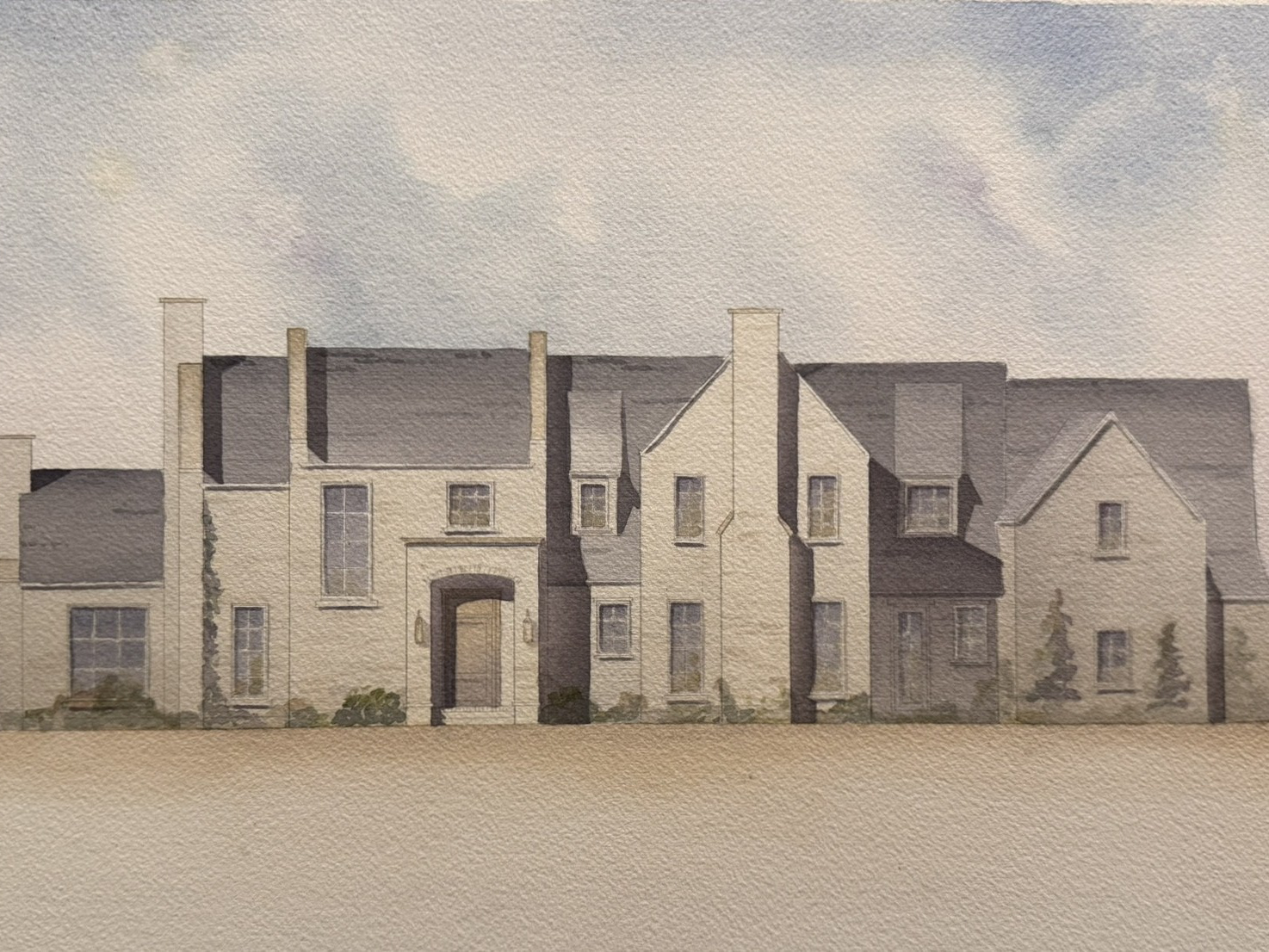
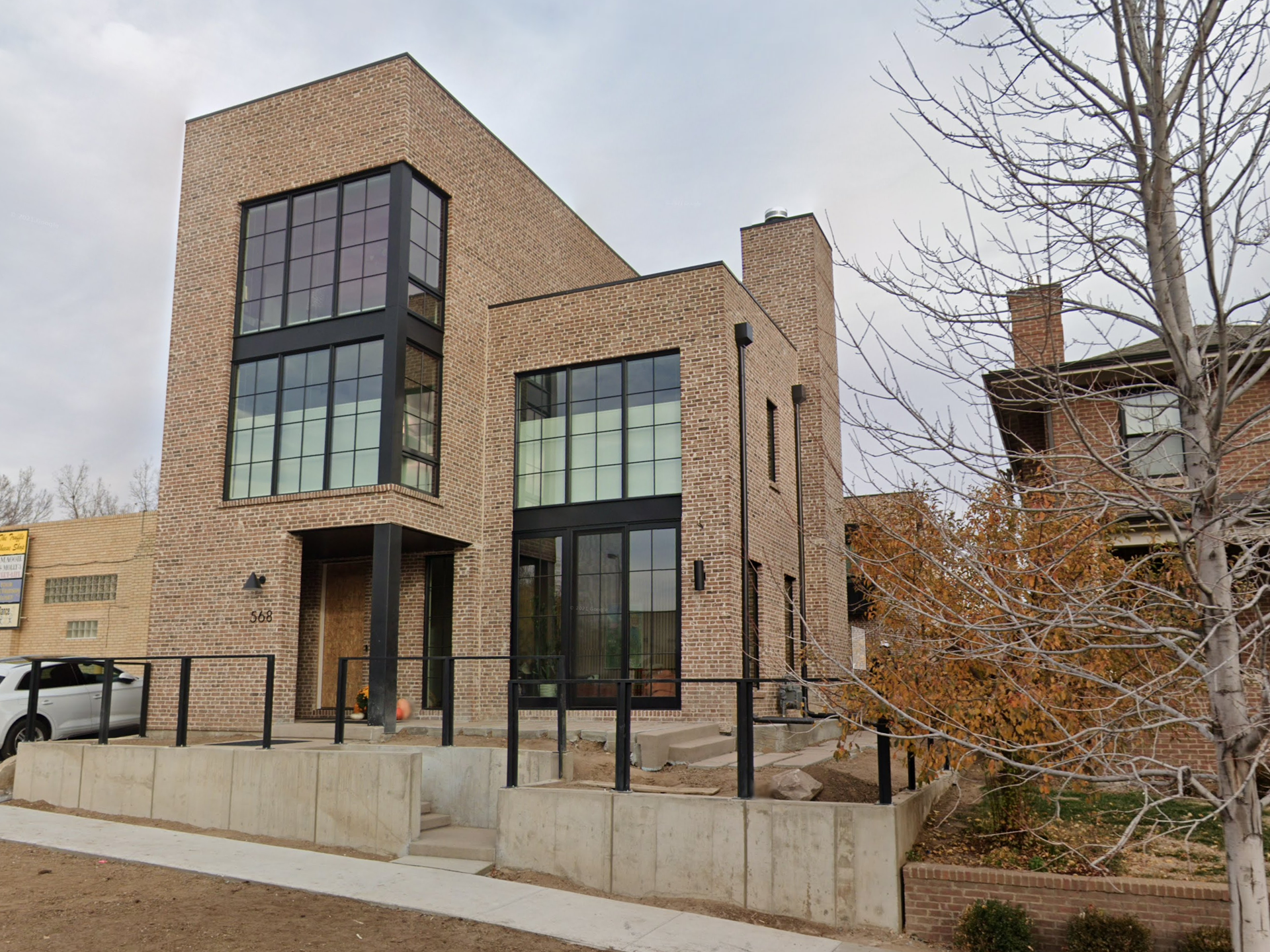
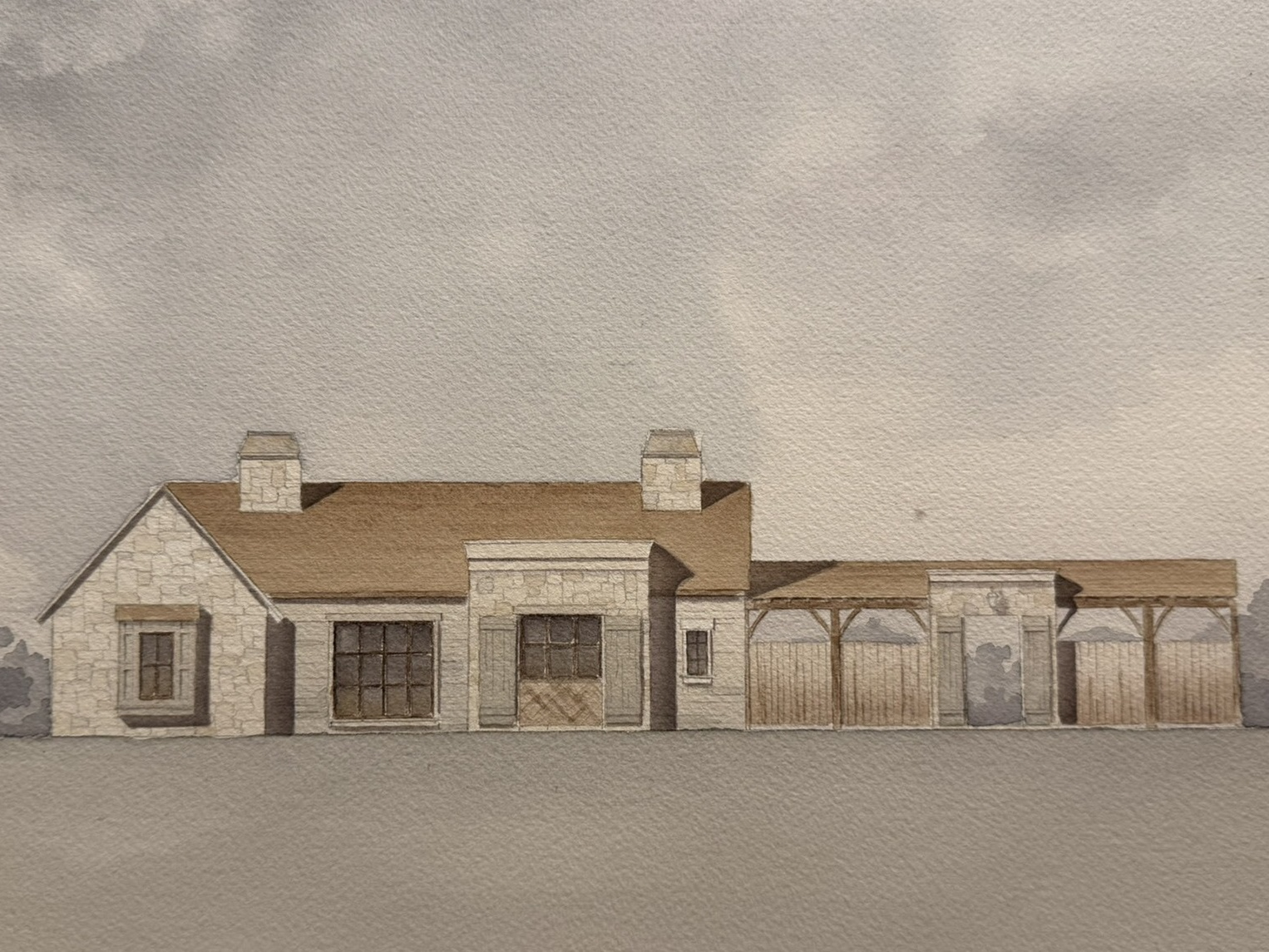
The existing house presents itself as an object rather than a presence. Its forms appear assembled from intention but not yet from memory; the façade is legible, yet it does not linger in the mind. The entry, while formally defined, lacks a threshold of psychological depth—it announces arrival without preparing the body for transition. One senses a building conceived through elevation rather than through inhabitation, where the eye is served more readily than the hand, the ear, or the slow passage of time.
In the proposed transformation, there is a palpable shift from image to experience. The architecture begins to gather weight and silence. Openings are no longer mere apertures but instruments of light—measured, directional, and suggestive of duration. Shadows acquire thickness; they are allowed to dwell. The façade relinquishes its earlier insistence on display and instead adopts a quieter, more resonant composure, where materials seem to remember their origins.
The rearticulated entrance is particularly telling. It withdraws slightly, creating a moment of hesitation, a necessary pause between the world and the interior. This deepening of the threshold transforms entry into an event—an embodied awareness rather than a visual cue. The house begins to acknowledge the ritual of arrival.
Materiality in the proposal suggests a move toward tactile intimacy. Surfaces appear less declarative and more absorptive, inviting proximity. One can imagine the grain, the temperature, the subtle resistance of touch. This is where the architecture starts to approach the realm of the lived: it is no longer simply seen but felt.
Yet, there remains a delicate balance to be maintained. The clarity of the original massing risks being diluted if the new gestures become overly articulate. The strength of the proposal lies precisely in its restraint—in allowing the house to become quieter, more inward, more attuned to the rhythms of dwelling.
Ultimately, the remodel gestures toward an architecture that is not consumed at a glance but unfolds in time—an architecture that shelters not only the body, but also the imagination.


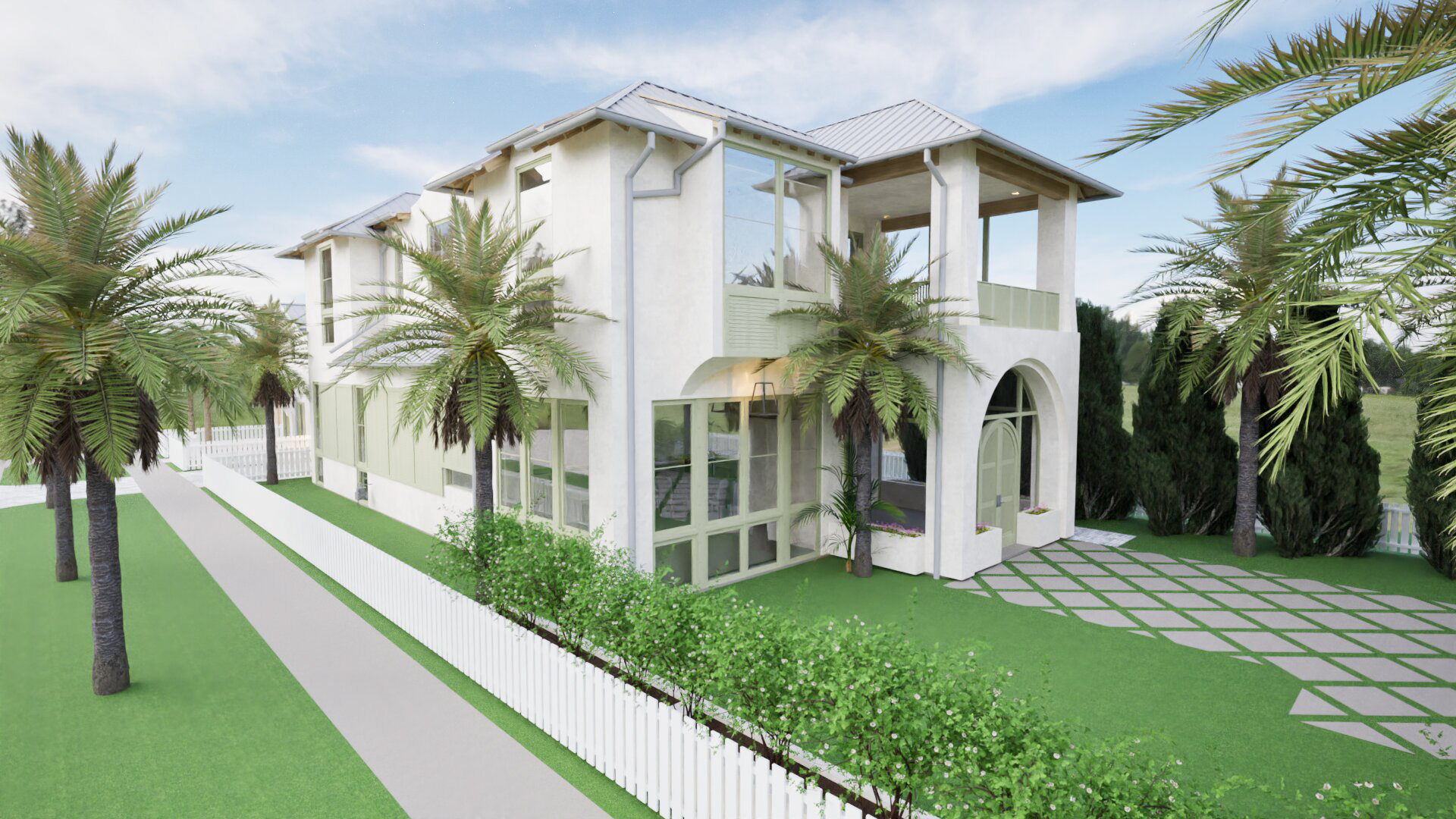
Proposed

Before
Location: Destin, FL
Builder: Jason Frasure of Shiloh Construction
Interiors: Justine Lafond of Jaunty J Interiors